Rosie Flanagan
Games Designer and Artist
Torchlight
Solo Developer
Sept 2025 - May 2026
For my final major project, I worked from themes of shadow, light, and black and white thinking to create 'Torchlight' - a fully realised game focused on providing players with a clear, calming and visually striking experience. As the Solo Developer, I became the level designer, programmer, artist, sound designer, UI designer and marketer, learning many new skills and building my confidence in areas I previously had less experience in.
Project Website: https://torchlight.fun/

Game Synopsis:
You don’t remember how it happened, but you’ve become a shadow. Explore a dichromatic yet familiar world from a unique perspective, where light is the only thing keeping you alive. Move objects and interact with light sources to create paths forward, all while collecting embers to brighten the world around you. Find your way out of the shadows of your home and slowly add the light back into your life.
Torchlight is a 2D Puzzle Platformer designed for casual players who want to experience a beautiful game world at their own pace. With easy controls and a soothing atmosphere, players can jump straight in without any distractions.


Project Goals:
- To create an aesthetic focussed gameplay experience.
- To create a serious and polished game for casual players.
- To create clear, fun and stress-free gameplay that stimulates the brain with a variety of challenges.
- To subtly explore themes of black and white thinking.
- To challenge myself to learn skills and use tools that I have minimal experience with.
What I've learnt:
- How to manage time and effectively scope a project for a short deadline.
- How to effectively market and engage with players through user testing and social media outreach.
- How to use industry standard tools such as Unity, Adobe Photoshop, Adobe Audition, Adobe Premier Pro and C# scripting.
- How to apply accessibility measures and develop intuitive gameplay.
- How to apply feedback and self-critique my work to reach the best possible outcome.

Design Journey:
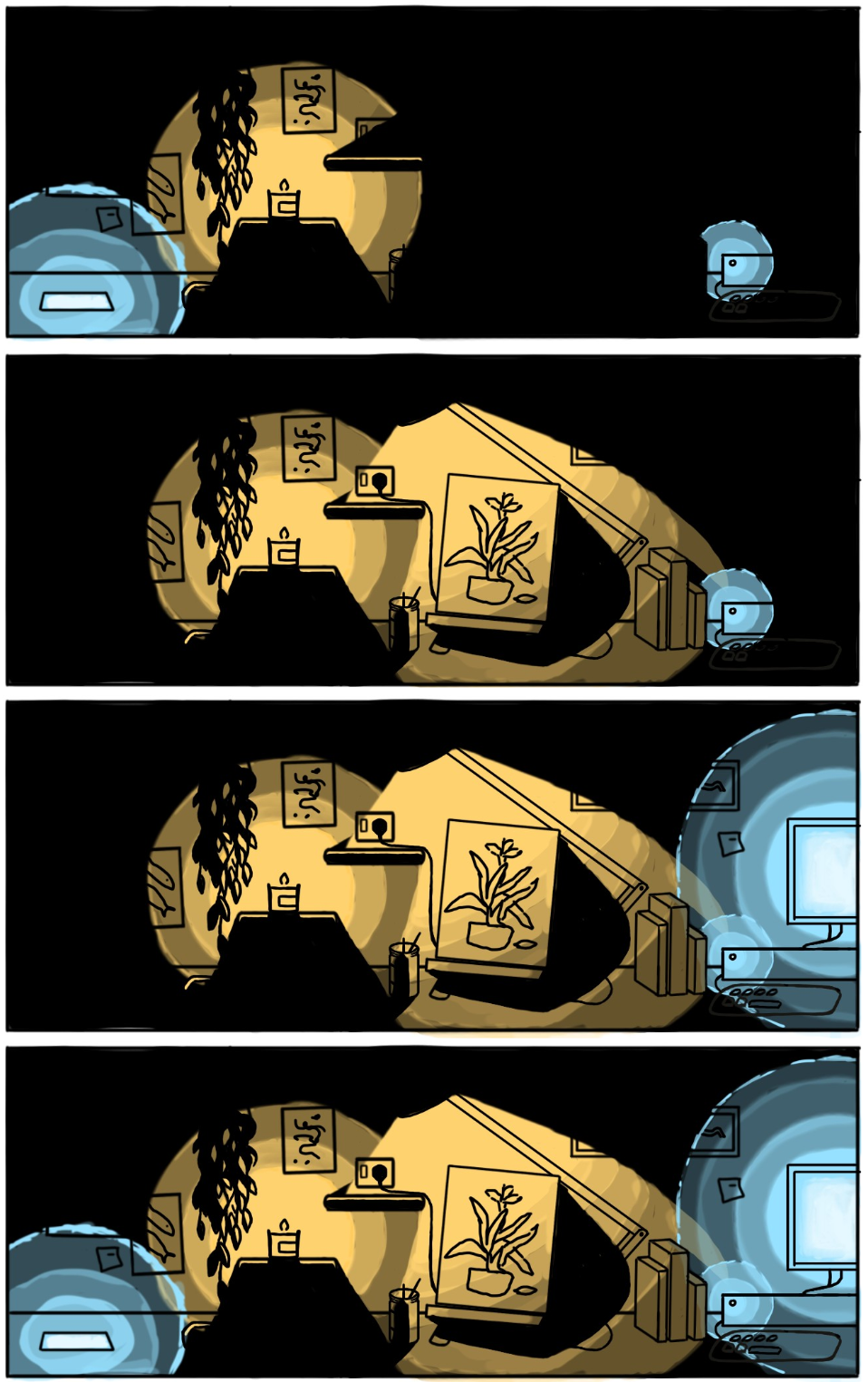



Original concepts
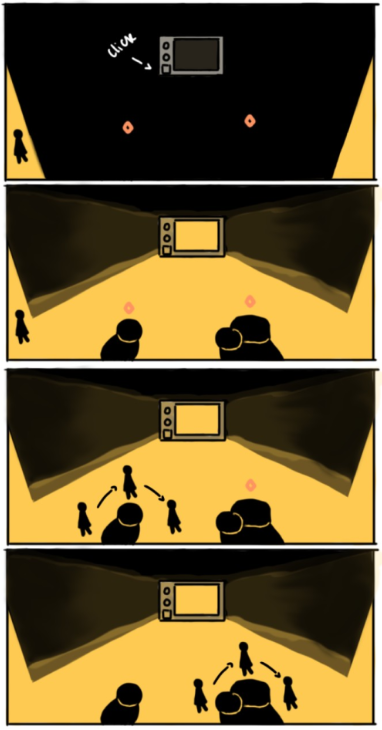
Level designs
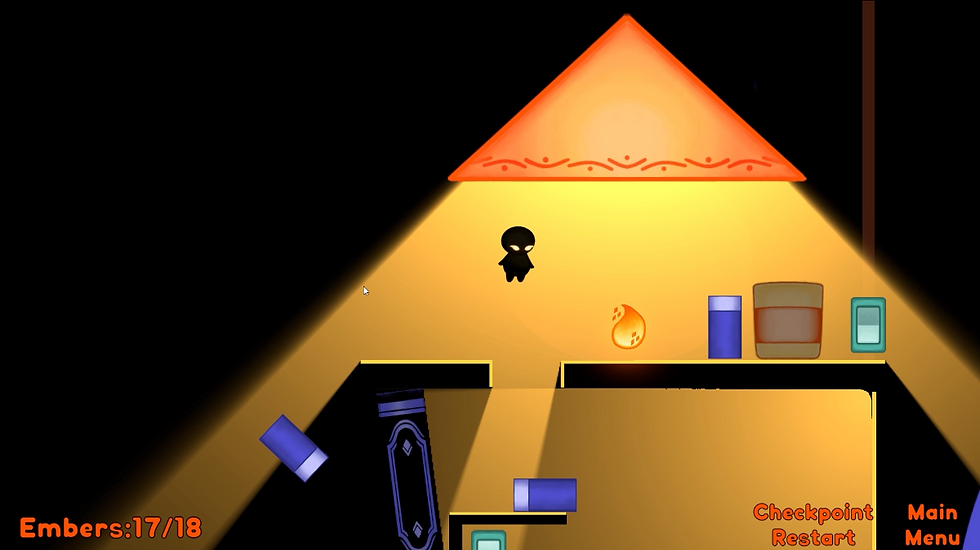
Final look
My original concepts for Torchlight demonstrate the simple but essential chiaroscuro art style. Originally intended for mobile, the HUD and UI were designed to be as minimal as possible, to make the game feel more like a playable piece of art. My overall goal was to make an intuitive, artistic and serious game accessible for casual players.
Difficulty fluctuates throughout the game, allowing for consistent challenge while keeping the player invested rather than frustrated. After a tricky puzzle, players are rewarded with something easy and fun. A simple set of mechanics are explained to the player in a tutorial stage. Rather than adding new mechanics and risk confusing the player, I considered a variety of different puzzles that could be created from the existing mechanics.
From my playtests, I received feedback that players weren't aware they had missed an ember until they had reached the checkpoint. Players also had to reset the whole game if they made a mistake that prevented progression. These issues were frustrating for players and broke immersion, so I decided to implement an ember count and a checkpoint restart button to fix these issues.


Designing the player sprite
Game assets
I wanted the player sprite to look simple but expressive with its movements and silhouette. I eventually selected the softer silhouette as it made the character look friendly and cute. I used sprite rigging and animation in Unity to create airy, bouncy and fun movement, giving the sprite extra personality. I consulted my classmates on the design, and it was recommended I used glowing eyes to help the player identify the sprite in darker areas. During playtests, players agreed they preferred this version of the sprite.
Colour was essential to helping players identify items, as some items could be interacted with, and some were just platforms. Orange items, such as Embers and Candles represented progression - players collect Embers to progress, the checkpoints (Candles) light up when they are passed, signalling their completion. Blue and Black books helped players identify which objects could be moved, and which were simply decorative platforms. Minimal detail was also essential to avoiding overcomplicating designs and confusing players. I originally had several switch designs, as seen above, but in the end I only used the right hand ones, avoiding unnecessary design variations that could confuse players. Platforms had yellow edges to show players where they could move and to guide them through the level. Dead ends or areas without light were left black to dissuade the player from going that way.